ATC 2026 Keynote
What Is Worth Remembering? I/O Stack Design for the Age of Agents
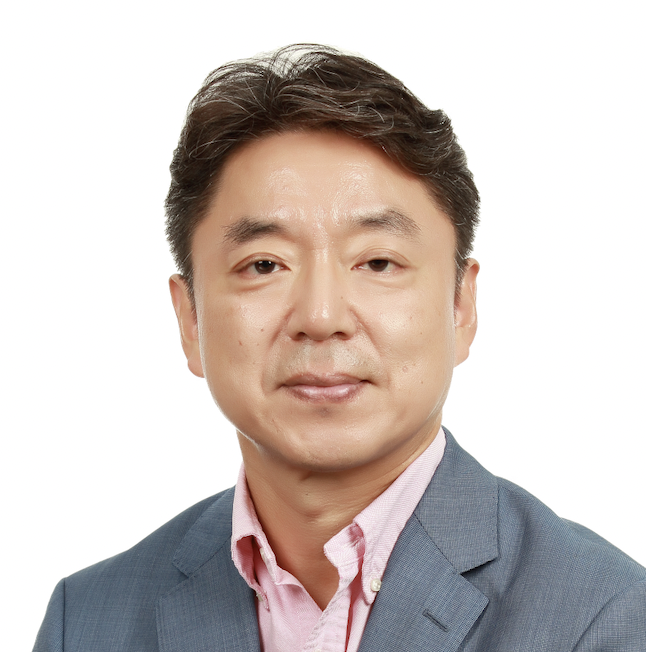
Youjip Won, KAIST
· – HKT (UTC+8)
View conference scheduleAbstract
For fifty years, storage systems have kept one promise: once written, data is never lost. Journaling, logging, and replication were built to keep it, and fsync() became the interface through which applications ask for it. File systems extend this promise to nearly everything they store, from bank records to temporary files, because they cannot tell what the data is worth. Keeping the promise has never been free, and much of our research, including my own, has tried to make it cheaper.
As flash replaced disks, the cost of enforcing write ordering through durability came to dominate I/O latency, which led us to separate the two guarantees. As core counts grew, the journal commit became a serial point that limited the whole machine, which led us to rethink how transactions are committed and what unit they should cover. As log-structured designs spread, garbage collection became the price of never overwriting, and we had to ask who should pay it and where the time really goes. In each case, the largest gains came from questioning a long-held assumption rather than from tuning.
Yet we have rarely asked which data needs the durability guarantee at all. In the era of agentic AI, the assumptions that have governed storage for fifty years no longer hold. The primary client of storage is shifting from the CPU to the GPU, and this shift raises a fundamental question: is durability still what storage is for? In this talk, I look back at what the I/O stack has taught us, revisit the durability guarantee that storage systems have strived to uphold for decades, and discuss how the role of storage changes in the era of agentic AI.
About the Speaker
Youjip Won is an ICT Endowed Chair Professor in the School of Electrical Engineering at KAIST. He received his B.S. and M.S. in Computer Science from Seoul National University and his Ph.D. in Computer Science from the University of Minnesota. His research spans Operating Systems, Distributed Systems, Storage Systems, and Software support for byte-addressable NVRAM.
He is known for his work on Android I/O stack optimization and on file system and block layer design for SSDs and NVRAM. His analysis of the Android I/O stack, which identified the root cause of I/O inefficiency in smartphones, received the Best Paper Award at USENIX ATC 2013. His redesign of the file system, block layer, and device firmware for flash storage received the Best Paper Award at USENIX FAST 2018. He developed the Namsan File System, which was deployed in commercial TV products.
He has served on the program committees of conferences including USENIX FAST, USENIX ATC, and ACM EuroSys, and as Program Co-Chair of USENIX FAST 2024 and General Co-Chair of ACM SOSP 2025. His honors include the Gaheon Outstanding Research Award from the Korean Institute of Information Scientists and Engineers (KIISE) and the Outstanding Researcher Award from Hanyang University. He is a member of the National Academy of Engineering of Korea and served as the 39th President of KIISE in 2024. KIISE is a leading academic society in computing and software in Korea.